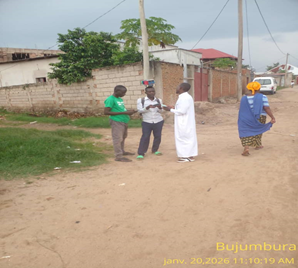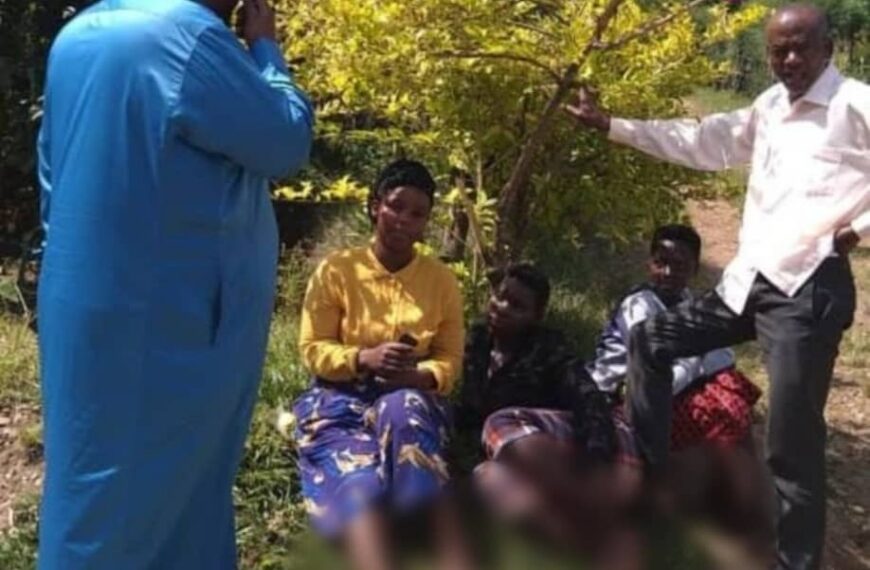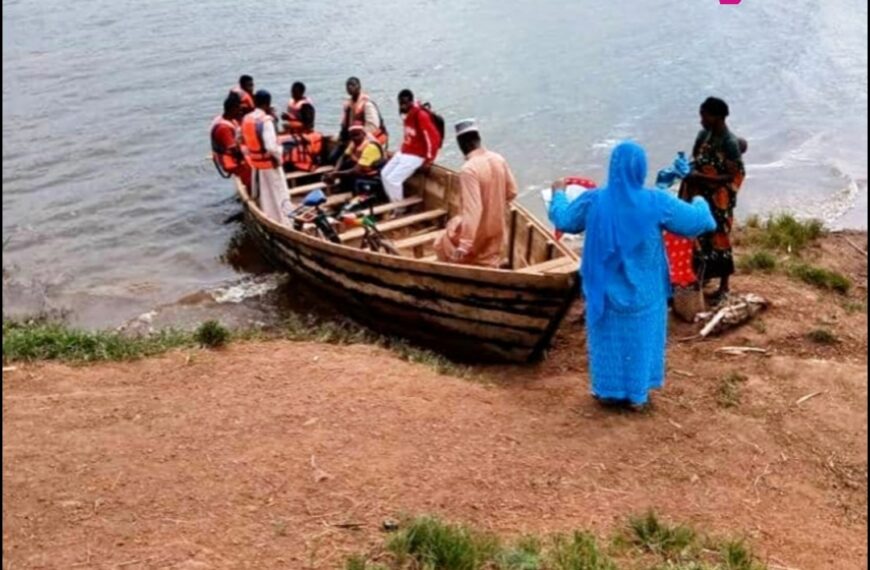

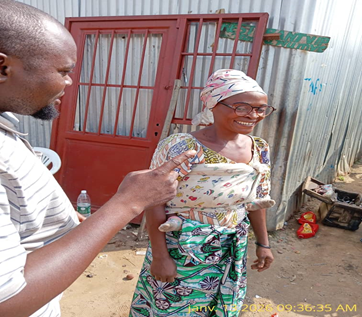
In the search for truth, many are drawn first not by theological arguments, but by the visible, living embodiment of a faith’s principles in the lives of its adherents. The heart often perceives what the mind later comes to understand. This is the story of Irankunda Ines, a woman whose path to Islam began not with a study of texts, but with a profound observation of the unique and powerful bond shared between Muslims, a bond that became her gateway to faith.
Irankunda Ines found herself increasingly attracted to Islam through the tangible qualities she witnessed in the Muslim community around her. She would often reflect, saying: “Muslims are people who help each other. There is a strong, unbreakable bond between them. That bond is Islam, and that is precisely what makes me love Islam.”
Her observation touches the very heart of Islamic social teachings. The story of Ines powerfully underlines the supreme importance of Ukhuwwah (brotherhood and sisterhood in faith), a cornerstone principle of the religion. Islam, as a complete way of life, explicitly aims to build a cohesive, compassionate society by strengthening human relations. It fosters this sacred connection and declares, as stated in the Quran, “The believers are but brothers, so make settlement between your brothers. And fear Allah that you may receive mercy” (Surah Al-Hujurat, 49:10). This is not a mere metaphor but a spiritual and social reality that governs interactions.
This divinely ordained brotherhood creates a sense of belonging and mutual responsibility that transcends all worldly divisions. It is a feeling that knows no boundaries of race, ethnicity, nationality, or social status. In the sight of Allah, and in the ideal of the Islamic community, all Muslims, irrespective of their colour, place of birth, or language, are equal and are brothers and sisters to one another. The Prophet Muhammad (peace be upon him) emphasized this in his farewell sermon: “All mankind is from Adam and Eve. An Arab has no superiority over a non-Arab, nor does a non-Arab have any superiority over an Arab; a white has no superiority over a black, nor does a black have any superiority over a white; except by piety and good action.”
For Ines, witnessing this universal solidarity in action was the most compelling evidence of Islam’s truth. She saw in this brotherhood a practical solution to human fragmentation and a source of strength she found lacking elsewhere. The love she felt for this bond was, in essence, a love for the divine wisdom that established it. Her attraction was a testament to the fact that when Muslims truly live the brotherhood their faith commands, they become the most powerful invitation to Islam, demonstrating its beauty through the sincerity of their unity and care for one another.