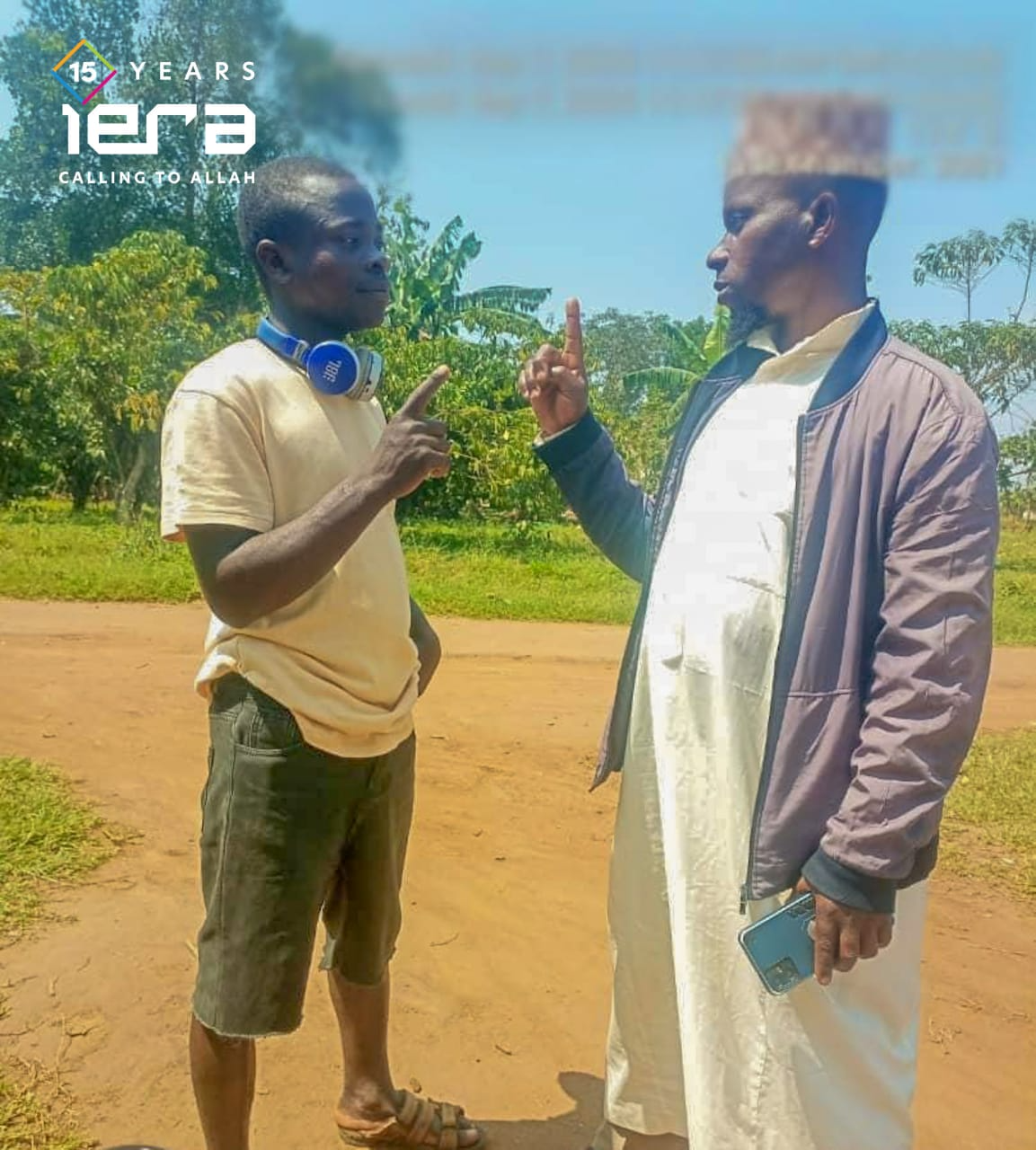

The afternoon sun cast long shadows as the iera Uganda Du’at walked along a dusty road, his heart set on spreading the message of Islam. He was deep in thought, when his eyes fell upon a young man sitting under the shade of a mango tree. He looked to be in his early twenties, and a simple, beaded rosary hung around his neck, a common sight in this part of Uganda.
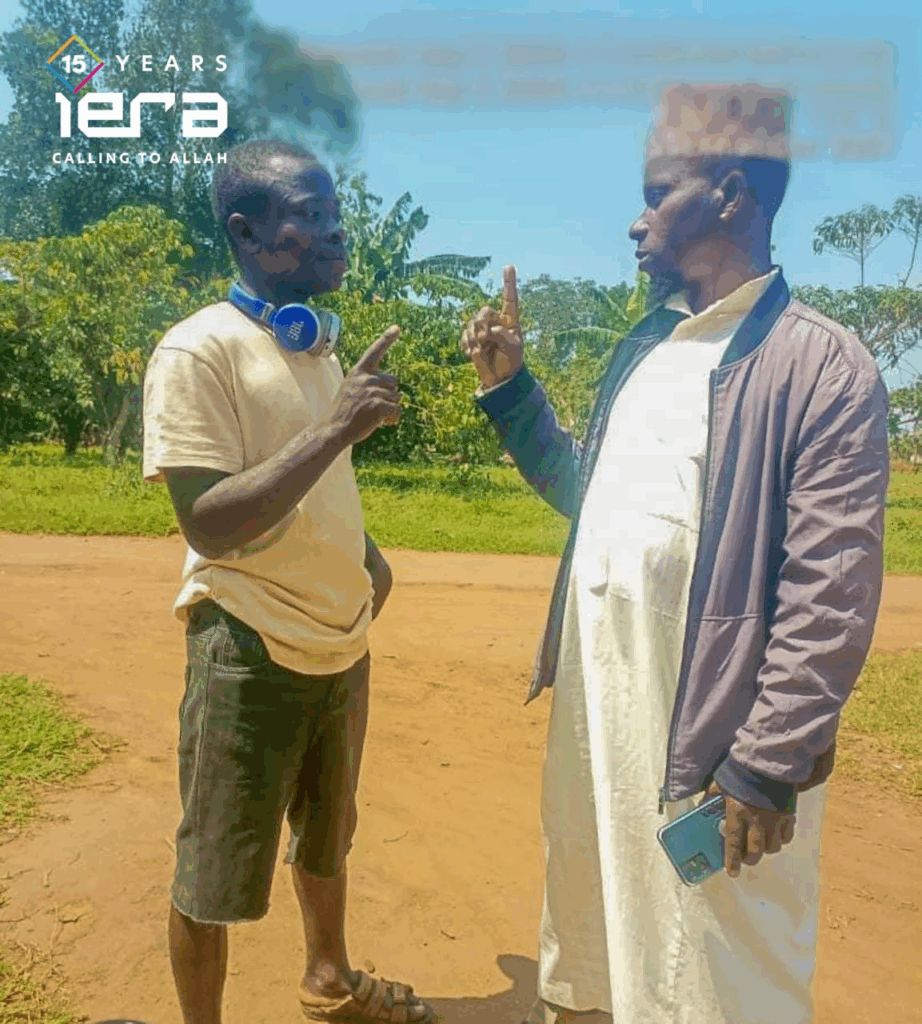
Approaching with a warm smile, the Du’at greeted the young man and introduced himself. The young man, Emanuel, listened with a respectful curiosity as the Du’at asked if he had ever heard of Islam. Emanuel’s eyes lit up. He confessed that he knew a little about the faith and had long been searching for answers to some questions that had troubled him.
“I’ve always wondered,” Emanuel began, gesturing to a nearby mosque, “why do Muslims remove their shoes before entering a house of God? In our church, we don’t.”
The Du’at smiled, feeling a connection with this sincere seeker of knowledge. “That is the way of the prophets,” he explained gently. “From Adam to Noah, Abraham, Moses, Jesus, and Muhammad—peace be upon them all—they all bowed in worship, and they all humbled themselves before God in this manner. It is a sign of respect, a recognition that the earth on which we stand is a sacred space for worship.”
Emanuel nodded slowly, a look of contemplation on his face. He had one more question, one that had weighed on his mind for a long time.
“What is the difference between God and Jesus?” he asked, his voice low and earnest. “We are taught that Jesus is God.”
“Jesus, or Isa, as he is known in Islam,” the Du’at answered, “is not God, but a prophet of God. One of the greatest prophets, in fact, sent to guide humanity. You see, a prophet is a servant of God. And is it not true that even Jesus himself bowed down and worshipped God? How could God worship Himself?”
The words struck Emanuel like a flash of lightning. A profound realization washed over him. The simple logic of Du’at’s explanation resonated with his heart. He had been taught that God and Jesus were one, but his own reason had always struggled with the idea of a God who prayed to another. Du’at’s words provided a missing piece of the puzzle, a clarity he had long sought.
Without a word, Emanuel reached up and unclasped the rosary from his neck. With trembling hands, he offered it to the Du’at, a symbolic gesture of the weight he was leaving behind. He then took his shahada, affirming his belief in the oneness of God and the prophethood of Muhammad. As the sun began to set, a new dawn broke for Emanuel. He was given a new name, Abdallah, a name that perfectly captured his new purpose: “Servant of God.” His journey, once a path of quiet searching, had found its destination.