
For years, Namujju stood firm in her Protestant faith, building a wall between herself and the religion of her household. Though she was married to a Muslim husband and raising their children in the Islamic faith, she kept her own distance. To Namujju, Islam was clouded by the heavy rumors she had heard: whispers that it was a religion of terror, and warnings that Muslims were harsh, cold-hearted people.
Her skepticism went even deeper, rooted in cultural misunderstandings and disturbing myths. She was deeply uncomfortable with how Muslims buried their dead, and she harbored a specific, troubling question: Why did Muslims preserve the water used to wash dead bodies and use it to cook food? This was the heavy baggage Namujju carried when she crossed paths with the duat from iERA.
Instead of meeting her skepticism with defensiveness, the iERA daees welcomed her questions with profound patience and kindness. They tackled her deepest reservations head-on.
They showed her the true essence of Islam, a religion rooted in peace, justice, and mercy—contrasting sharply with the negative headlines and hearsay she had relied on.
They explained the deep dignity, simplicity, and respect Islam accords to the deceased through immediate, clean, and equal burial practices.
They gently corrected the bizarre misconception about the washing water, explaining that Islamic hygiene laws are exceptionally strict. Water used to wash the deceased is simply drained away, and the entire process revolves around absolute purity, cleanliness, and sanctity. There is absolutely no practice of keeping or reusing that water.
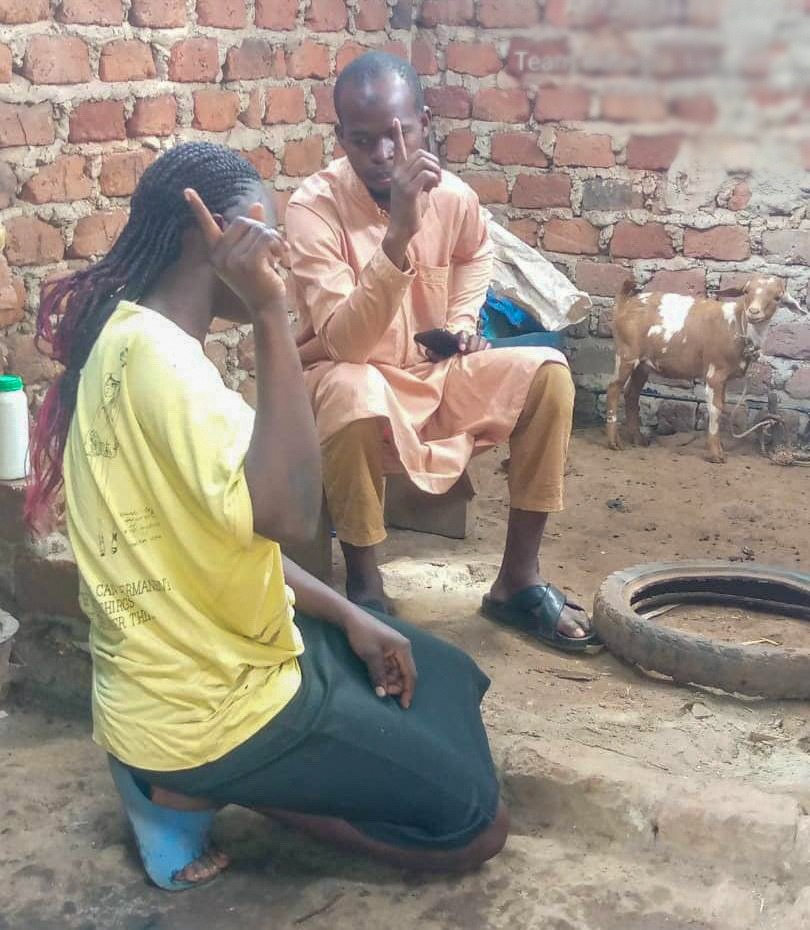
Though the duat answered everything to her complete satisfaction, a lingering hesitation kept Namujju from taking the leap. Recognizing her hesitation, the team didn’t pressure her. Instead, they extended a warm, no-strings-attached invitation: “Just come and learn.”
Namujju agreed to attend the iERA New Muslim classes purely as a listener. Week after week, she sat quietly, observing and absorbing the environment. What she found there was the exact opposite of what she had feared. There was no hostility, only warmth, community, and profound clarity.
The teachers focus on The Oneness of God (Tawhid): Stripping away complex theological barriers to reveal a direct, pure relationship with the Creator. Slowly, the gentle persistence of the teachers and the beauty of the message began to work on her. The heavy armor of prejudice she had worn for years started to melt away. The teachings didn’t just make sense; they resonated deeply within her.
The turning point came quietly. Having witnessed the true character of the Muslims around her and finally understanding the pure theology of the faith, Namujju’s heart softened completely. The hesitation that had held her back for years vanished.
With a clear mind and a peaceful heart, she chose to declare her Shahada , officially stepping into the fold of Islam. To mark this beautiful new chapter of spiritual clarity, she chose a new name, becoming Namujju Fatima.
Today, Fatima no longer stands on the outside looking in. She shares the same prayer mat as her husband and children, united not just as a family, but in the peaceful bond of faith.